Method 02 · Easy rice-cooker version
Rice Cooker Hainanese Chicken Rice with Chicken Thighs
This one-pot version uses bone-in chicken thighs for easy portioning. The chicken cooks above jasmine rice, releasing savory juices while ginger, garlic, scallions, and broth season the grains.
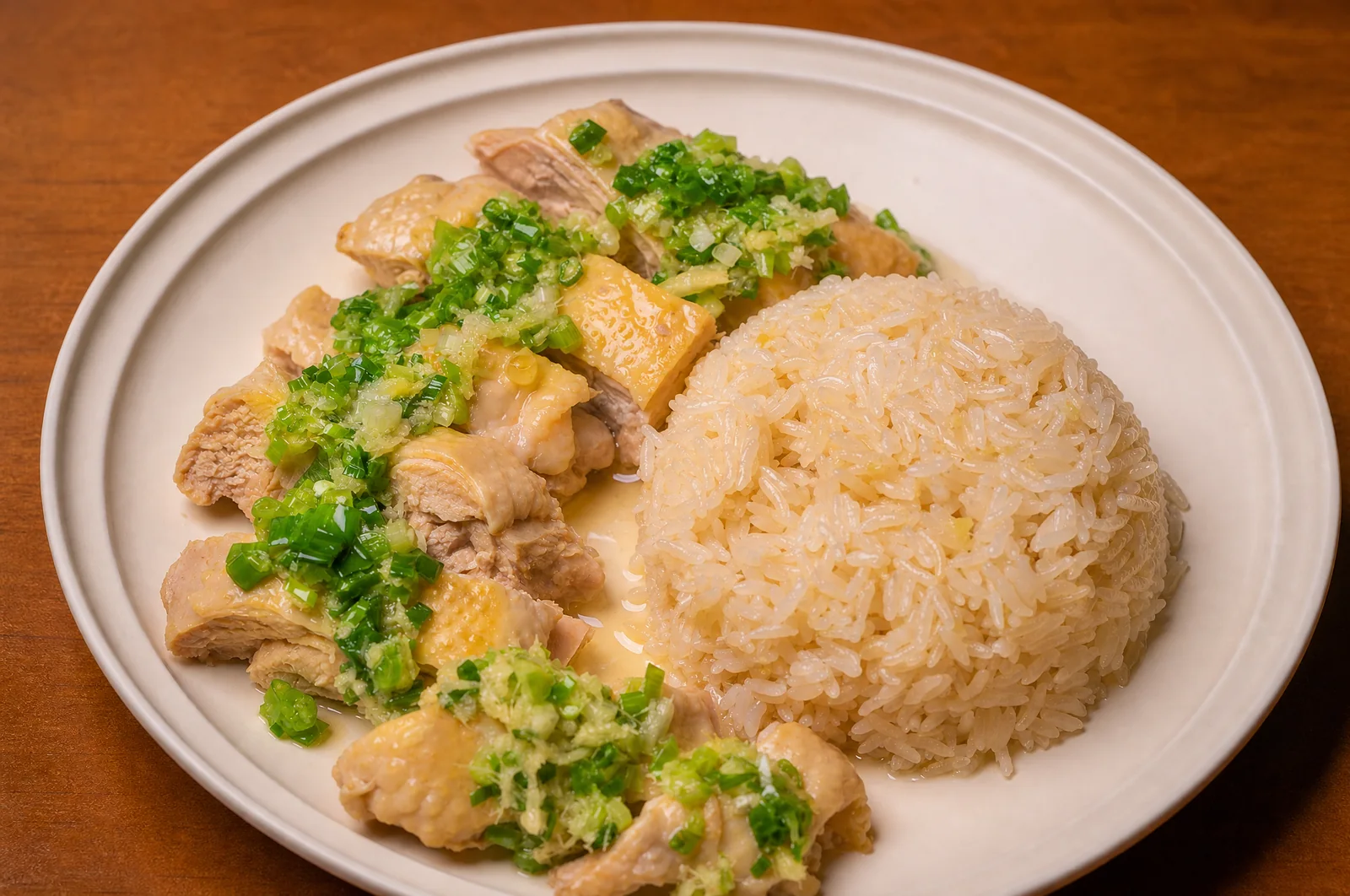
Ingredients for 4 servings
- 4 bone-in, skin-on chicken thighs, about 700–900 g / 1½–2 lb total
- 1 teaspoon fine sea salt, plus more to taste
- 300 g / 1½ cups jasmine rice
- 360 ml / 1½ cups low-sodium chicken broth
- 1 tablespoon rendered chicken fat or neutral oil
- 25 g fresh ginger, finely chopped or grated
- 4 garlic cloves, minced
- 3 scallions, white and green parts separated
- 2 pandan leaves, tied in a knot, optional
- Cucumber and Hainanese chicken rice sauces to serve
How to make it in a rice cooker
- Pat the thighs dry and season with salt. Rinse the rice until the water is mostly clear, then drain it thoroughly.
- If your cooker has a sauté function, warm the fat and cook the ginger, garlic, and scallion whites for about 1 minute. Otherwise, do this in a small pan and transfer everything to the cooker.
- Add the rice and stir to coat it in the aromatic fat. Pour in the broth and level the rice. Add pandan, if using.
- Lay the chicken thighs in a single layer on top, skin side up. Close the lid and run the regular white-rice cycle.
- When the cycle ends, check the thickest part of every thigh without touching bone. It must reach 165°F / 74°C. If needed, remove the chicken and finish it separately while keeping the rice covered.
- Rest the rice for 10 minutes, remove pandan, and fluff gently. Slice the chicken and finish with scallion greens.
Adjust for your rice cooker
Cookers vary in capacity, heating pattern, and cycle length. Do not exceed the manufacturer’s maximum fill line. If your usual jasmine-rice setting uses a different liquid level, begin with that appliance-specific level and remember that chicken thighs release additional liquid.
Rice too wet?
Drain rinsed rice longer, reduce broth slightly next time, and rest before fluffing.
Rice still firm?
Add a small splash of hot broth and run a short additional cycle with the lid closed.
Chicken below 165°F?
Finish the thighs separately instead of repeatedly overcooking the rice.
Serve the complete plate
Serve the chicken and rice with cucumber, ginger-scallion sauce, chile-garlic sauce, and dark soy. For a soup, warm extra chicken broth with a few slices of ginger and season lightly.