Diagnostic guide
Diagnose the Plate
Start with the part that went wrong—chicken, rice, broth, or sauce—then make one focused adjustment instead of changing the whole recipe at once.
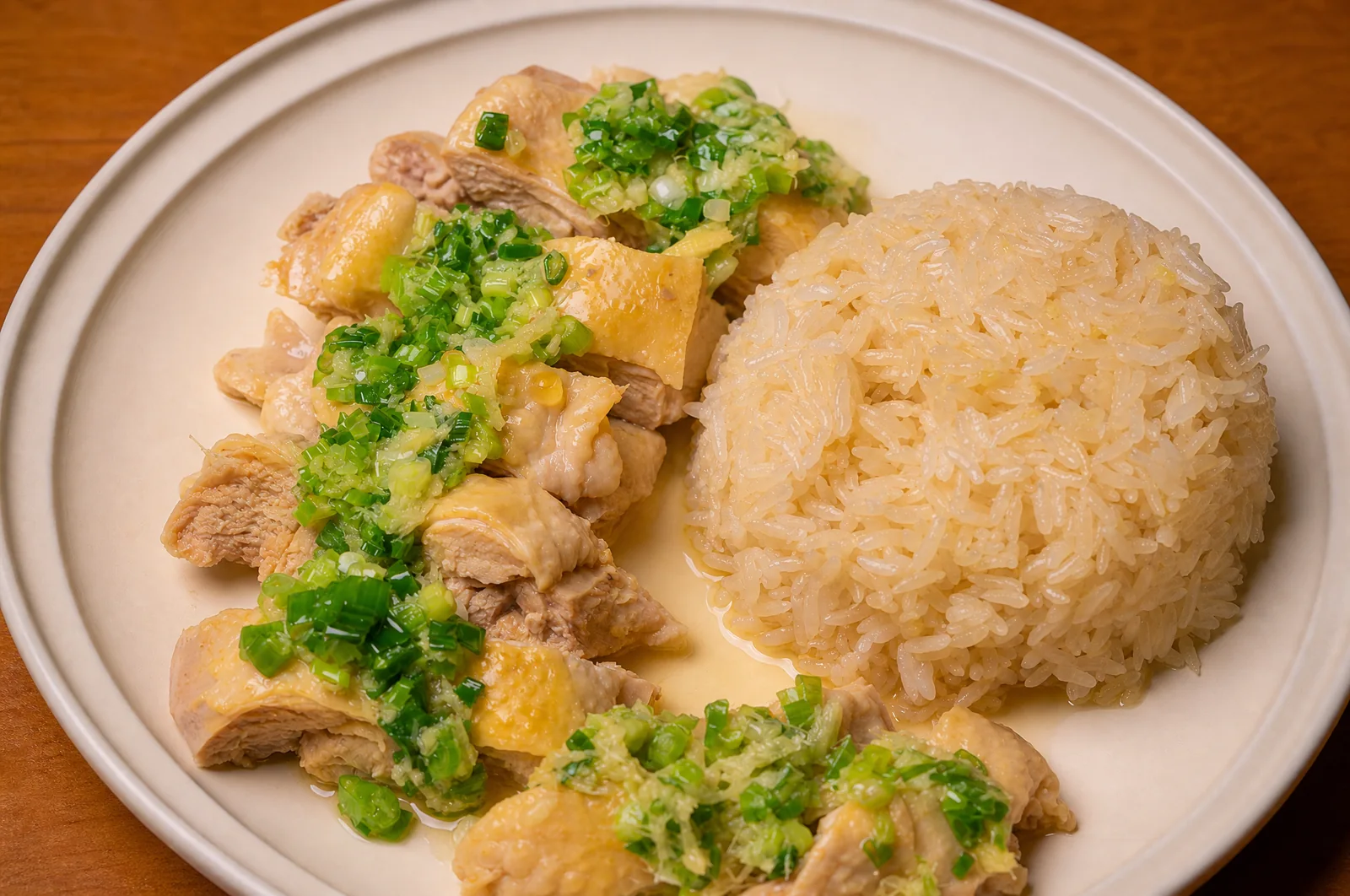
Symptom → cause → next check
| Symptom | Possible cause | Next check |
|---|---|---|
| Chicken seems dry | Excess heat or prolonged holding | Review measured temperature and hold time |
| Chicken is below 165°F / 73.9°C | Insufficient cooking | Continue cooking and recheck with a thermometer |
| Rice is greasy | Too much rendered fat | Weigh fat in the next batch |
| Rice is gummy | Excess liquid, unsuitable ratio, or handling | Record rice brand, drain time, and liquid weight |
| Rice is firm inside | Insufficient absorbed liquid or heat | Check cooker or pot behavior before adding liquid blindly |
| Rice tastes flat | Weak broth or low seasoning | Taste and record broth before cooking |
| Chile sauce tastes harsh | Raw aromatics or acid out of balance | Compare resting time and measured ratios |
| Ginger sauce feels heavy | Excess oil or coarse texture | Compare oil-to-aromatic ratio and preparation method |
Make one adjustment at a time
If you change the rice brand, broth volume, fat, heat, and resting time together, you will not know which adjustment solved the problem.
- Write down the symptom in concrete terms.
- Note weights, temperatures, times, and equipment from that batch.
- Choose one likely cause and one measurable change.
- Cook again before making another adjustment.
Safety comes first. If poultry has not reached the safe minimum temperature, continue cooking before investigating tenderness or skin texture.