Method 01 · The complete plate
Whole Chicken Hainanese Chicken Rice
The classic route begins with one whole chicken. Its poaching broth seasons the rice and becomes the soup, so the chicken, rice, and sauces taste like parts of the same meal rather than separate recipes.
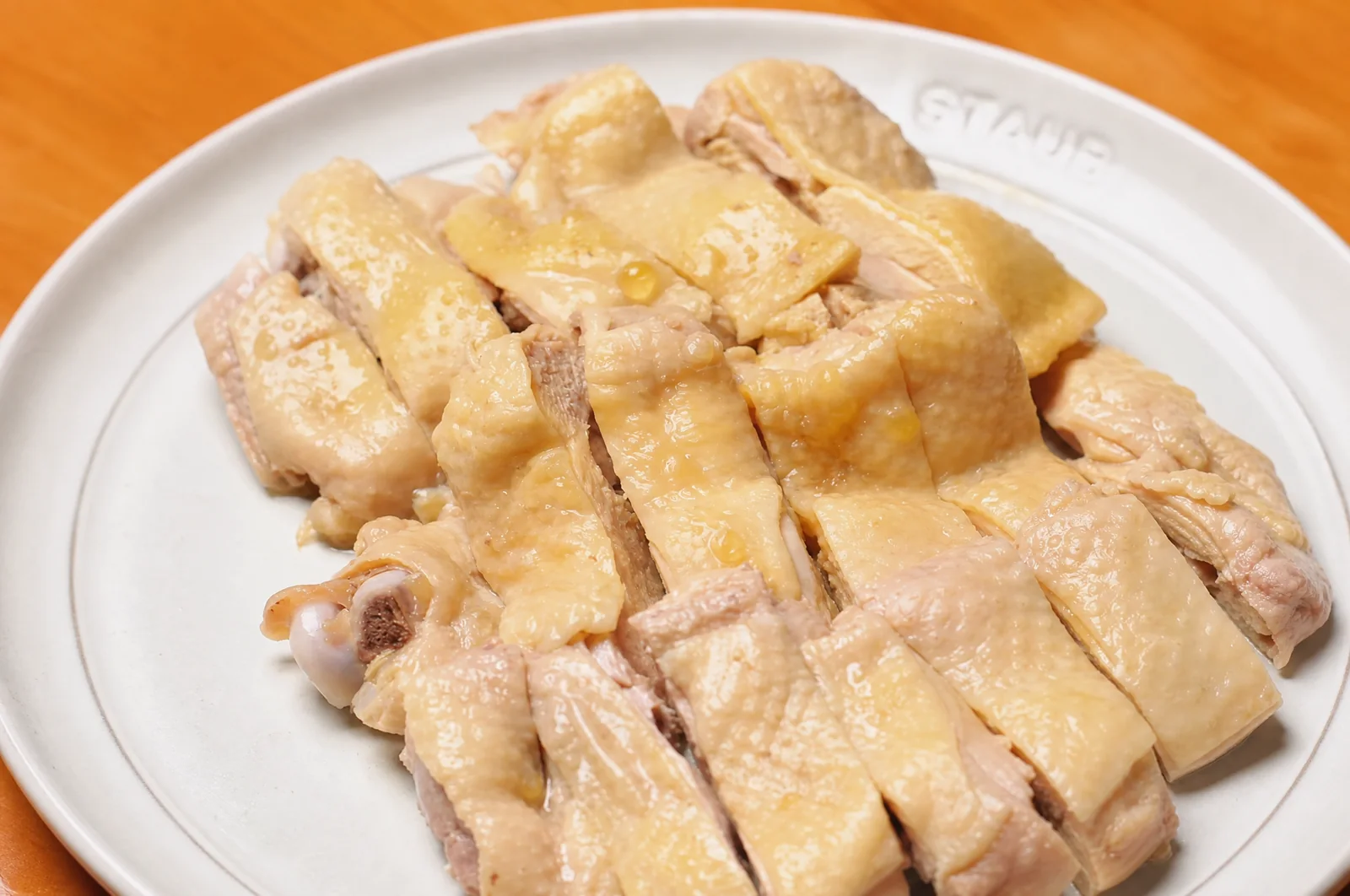
What makes the whole-chicken method different
A whole bird gives you tender breast meat, richer leg meat, skin, bones, and enough broth to carry flavor through the entire plate.
Gentle poaching
Keep the liquid at a quiet simmer. A hard boil can tighten the meat and tear the skin.
Useful broth
Reserve measured broth for the rice, then season the remainder lightly and serve it as soup.
Rest before carving
A 15-minute rest makes the chicken easier to carve and helps retain its juices.
Ingredients for 4–6 servings
- 1 whole chicken, about 1.4–1.7 kg / 3–3¾ lb
- 2 teaspoons fine sea salt
- 80 g / 3 oz fresh ginger, sliced
- 8 scallions, cut into short lengths
- 10 garlic cloves, lightly crushed
- 300 g / 1½ cups jasmine rice, rinsed and well drained
- 3 tablespoons rendered chicken fat or neutral oil
- 420 ml / 1¾ cups reserved chicken broth
- 4 pandan leaves, tied in a knot, optional
- Cucumber, cilantro, chile sauce, ginger-scallion sauce, and dark soy sauce to serve
Use the scalable ingredient checklist on the homepage recipe when cooking for a larger group.
Step-by-step method
- Season the chicken. Pat it dry; do not wash raw poultry. Rub with salt and place half the ginger, scallions, and garlic inside the cavity.
- Begin the poach. Put the chicken in a close-fitting pot with the remaining aromatics. Add enough cool water to cover, bring just to a boil, then immediately reduce to a very gentle simmer.
- Cook to temperature. Cover and poach gently. Begin checking around 35 minutes. The thickest breast and the innermost thigh and wing must each reach 165°F / 74°C without the probe touching bone.
- Rest and strain. Lift out the chicken and rest it for 15 minutes. Strain the broth, reserve 420 ml for the rice, and keep the remainder hot.
- Cook the rice. Fry a little minced ginger and garlic in chicken fat. Add the drained rice and stir for 2–3 minutes. Add reserved broth and pandan, cover, and cook until tender. Rest 10 minutes, then fluff.
- Finish the meal. Mix the three sauces, carve the chicken, slice cucumber, and season the remaining broth lightly for soup.
Use temperature, not color, to check doneness
Check three places on a whole bird
Insert a clean instant-read thermometer into the thickest breast and the innermost thigh and wing, avoiding bone. Continue cooking if any location is below 165°F / 74°C.
Food-safety source: USDA safe minimum internal temperature chart.
How to serve it
Spoon fragrant rice onto each plate and add sliced chicken and cucumber. Serve a small bowl of clear broth alongside. Put ginger-scallion, chile-garlic, and dark soy sauces on the table so each person can balance richness, heat, acidity, and sweetness.